
About the game
Arcana Investigations
A noir interactive fiction set in 1947 Crescent City. Written for people who take both detective stories and tarot seriously.
Arcana Investigations is a browser-based interactive fiction — a story you navigate by making choices. Each choice reveals a different path through the same murder. There is no game over. There is no wrong answer. There are only different truths.
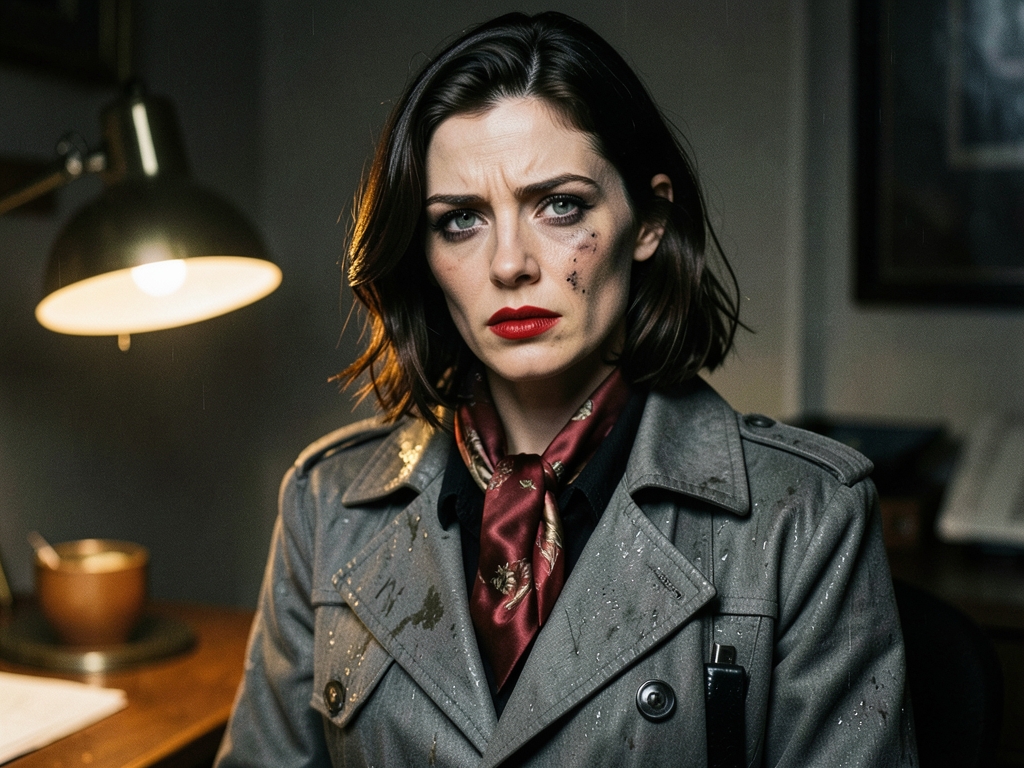
You play as Vera Saint-Claire, a private detective in a corrupt port city working six interlocked cases across two volumes. The free prequel (Volume 0: The Hanged Man's Daughter) takes roughly two hours and ends with a choice that costs something. Volume 1 (The Crescent City Murders) is five connected cases and $6 Early Access.
No install. No account. No violence depicted gratuitously. Just prose, choices, and a deck of cards.
Vera's tarot deck is not a magic system. The cards do not predict outcomes. They are a symbolic shorthand — twenty-two archetypes mapped onto human psychology, pulled from the collective unconscious and applied to suspects, motives, and contradictions.
At the start of each case and at its midpoint, the deck makes a fate draw — a three-card spread Vera reads as a pattern, not a prophecy. The draw is real (randomised). Her interpretation may be wrong. The reader's interpretation may differ from hers. That gap is intentional.
The cards show what the detective is refusing to see. Reversed cards indicate blockage, suppression, distortion — a pattern that has been inverted by force. Vera knows this. That doesn't mean she always listens.
Each case follows a diamond-flow structure: a branching opening (Action vs. Intellect), a convergence midpoint where paths rejoin, a second divergence, a confrontation, and two possible endings. The endings are not good and evil. They are different costs.
Relationship flags track how NPCs respond to Vera over time — informants go cold, allies get used up, enemies remember. Cases in Volume 1 carry consequences forward. What you discover (or destroy) in Case 1 echoes through Case 5.
The game is written in first person, past tense, noir register. Vera is cynical but not nihilistic — she still believes in truth even after learning what truth costs. Her narration runs on pattern-recognition, gallows wit, and the persistent suspicion that what someone is not saying is more important than what they are.
"The cards don't see the future. They see patterns. Same thing people miss when they're looking straight at the truth."
"Everyone lies. The trick is figuring out what they're lying about and why."
"I stopped believing in justice when I was a cop. But I still believe in truth. Someone has to."